🧠 Laravel Eloquent: How to Eager Load Nested Relationships with Clean Array Syntax
If you're building applications with Laravel, you've probably run into the N+1 query problem. Fortunately, Laravel Eloquent makes it super easy to solve this using eager loading.
But did you know you can also eager load nested relationships using clean array syntax?
Let’s make it super simple. 👇
✅ The Problem
When you fetch a model and its relationships without eager loading, Laravel hits the database again and again for every related model. This slows down your app.
✅ The Clean Solution
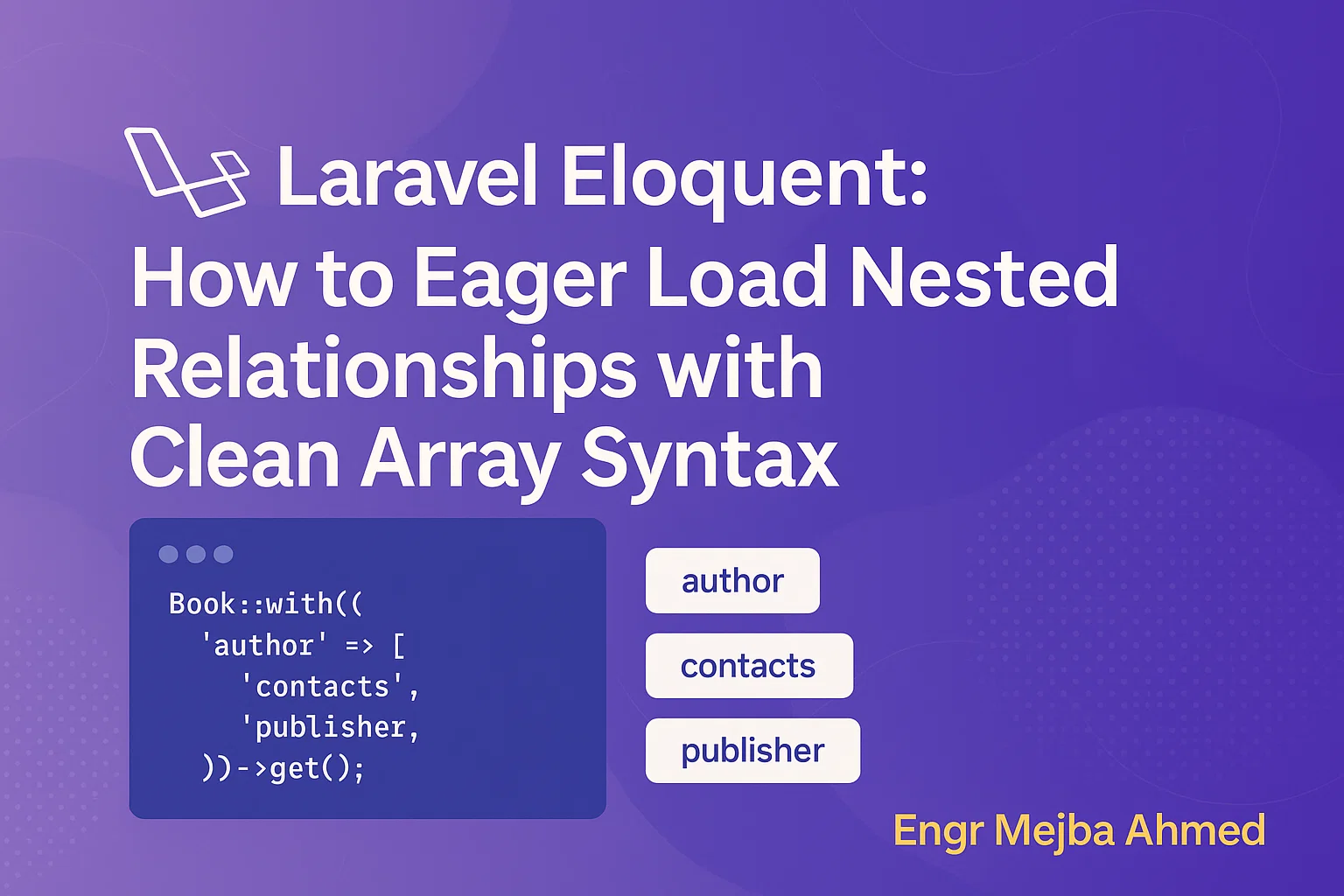
Use the with() method and pass an array that includes any nested relationships. Here's a clean and readable way to load nested data:
Book::with([
    'author' => [
        'contacts',
        'publisher',
    ],
])->get();
This code will:
- Get all books
- Load each book’s
author - For each
author, also load theircontactsandpublisher
All in one clean query set 💡
📌 Why This Matters
- Faster performance with fewer queries
- Cleaner code that's easy to read and maintain
- Perfect for API responses or when dealing with complex relationships
💬 Final Tip
Whenever you're loading nested data, always prefer this clean array syntax. It keeps your codebase elegant—and your app blazing fast. 🔥