
The Build in Public Flywheel: My AI Business Framework
The number still surprises me when I look at it: $500,000 in 2025, and the primary catalyst was Claude Code.
I'm not saying this to brag. I'm saying it because when I started this journey, I had no special advantages. No massive following. No venture capital. Just a terminal, Claude Code, and a framework that works.
The breakdown looks like this: over $300,000 came from a single SaaS product I built using Claude Code. The remaining $100,000+ flowed from content—ad revenue, subscriptions, sponsorships, and a private community. The rest came from consulting and smaller projects that stemmed from visibility the content created.
What I'm about to share isn't theory. It's the exact playbook I used, and it's simple enough that you can start today. Not tomorrow. Today.
The Problem Most AI Builders Face
Here's what I see constantly in developer communities: talented people who've mastered Claude Code or similar AI tools, building impressive demos that go nowhere. They create proof-of-concepts, post them once, and wonder why nobody cares.
The issue isn't technical skill. The issue is thinking like an engineer instead of a builder.
Engineers focus on elegant code. Builders focus on solved problems. Engineers optimize for performance. Builders optimize for getting paid.
I spent years in the first camp. Building things nobody asked for. Refactoring code that never shipped. Perfecting features for products with zero users.
The shift happened when I realized that the same AI tools helping me code faster could also help me find problems worth solving, create content that attracts customers, and iterate based on real feedback—all without quitting my day job or investing significant capital.
The framework I developed works even if you have zero followers and can only commit 10 minutes per day to start.
The Build in Public Flywheel
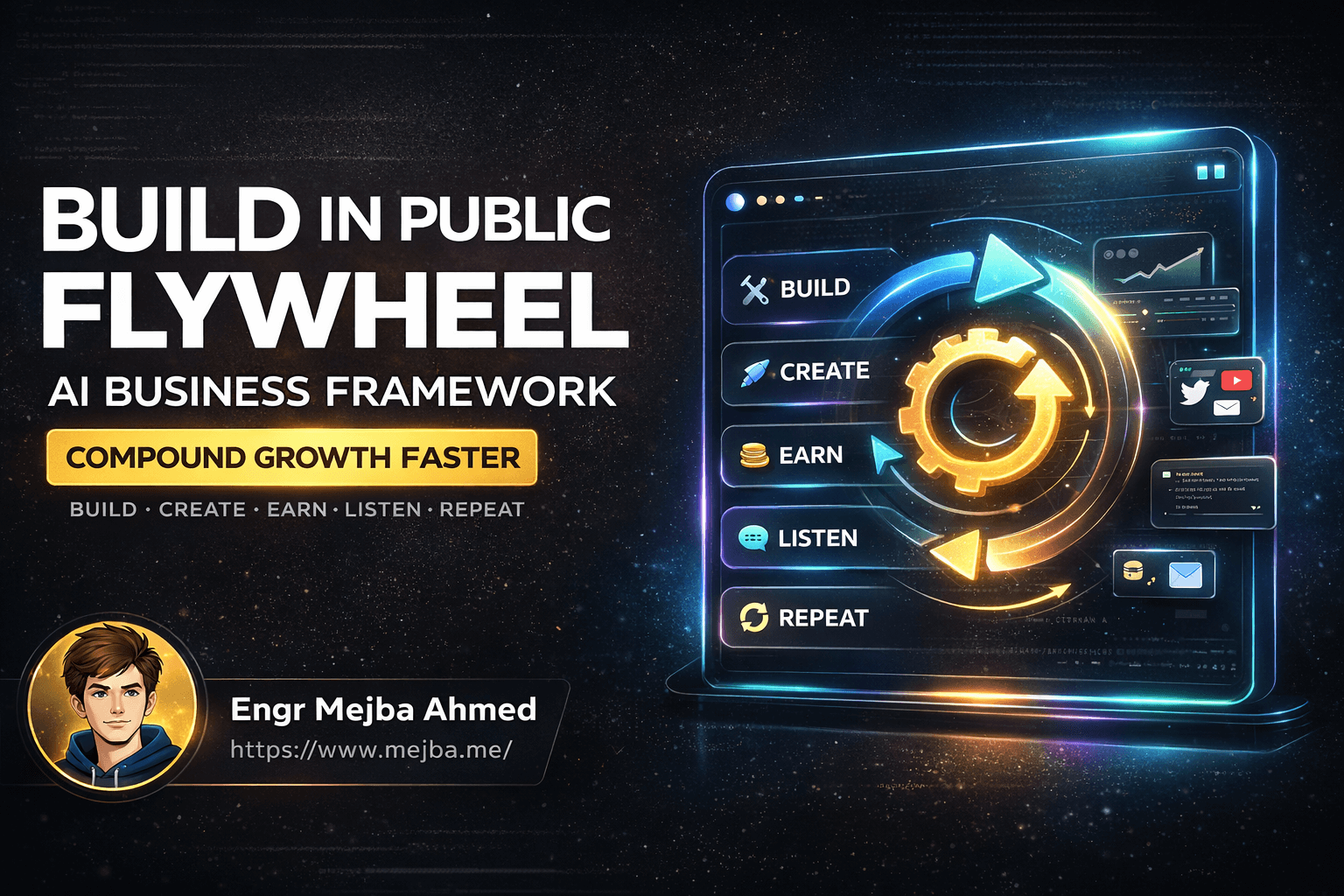
The core concept is a self-reinforcing cycle with four phases:
Build → Create → Earn → Listen → Build again
Each phase feeds the next. Your apps provide content material. Your content attracts customers. Customer feedback improves your apps. Better apps generate more content opportunities.
Let me break down each phase with exactly what I do.
Phase 1: Build Apps That Solve Your Own Problems
The apps most likely to make money solve problems you personally experience. This isn't motivational advice—it's pattern recognition from watching hundreds of AI builders succeed or fail.
When you solve your own problem, you understand the pain viscerally. You know which features matter and which are fluff. You can test the solution immediately. And critically, if you have this problem, others probably do too.
My highest-earning product, Creator Buddy, came from a frustration I couldn't ignore. I was spending hours every week analyzing my Twitter engagement—manually scrolling through tweets, trying to figure out what worked, when to post, what topics resonated. It was eating my time and I hated every second.
So I asked Claude Code to help me build a solution. Within a day, I had a CLI tool that analyzed engagement patterns, tracked sentiment, and identified optimal posting times. I used it myself for a month. Then I realized other creators had the same problem.
That personal tool became a $300,000+ SaaS.
Here's the practical exercise I recommend:
Open a notebook—physical or digital—and brain dump every frustration from your daily workflow. Don't filter. Write down every time you think "this is tedious" or "there should be a tool for this."
Then feed that list to Claude Code. I use a prompt like:
Here are challenges I face regularly:
[paste your list]

Suggest 5 specific app ideas that would solve these problems.
For each idea, describe the core functionality and potential users.
Claude Code will generate options you hadn't considered. When I ran this exercise recently with a test list, it suggested:
- A CLI tool for Twitter engagement analysis (which became Creator Buddy)
- A script generator for YouTube content with hook templates
- A recipe finder based on ingredients currently in your fridge
- A workout planner generating routines based on goals and equipment
- A YouTube thumbnail builder with A/B testing
The workout planner caught my attention. I've been inconsistent at the gym partly because I never know what exercises to do for my specific goals. So I built it as a demonstration—a project I'm calling Iron Forge.
Building Iron Forge with Claude Code:
I opened Claude Code and described what I wanted: a workout planner that generates personalized muscle-building routines based on experience level, available equipment, and time constraints.
Claude Code asked follow-up questions about design preferences. I said dark theme, bold typography. Within seconds, it produced:
- A multi-step form for user input
- Responsive UI that works on mobile
- Logic for generating customized workout plans
- Clean, production-ready code
The entire functional app took less time than writing this section of the article. That's the leverage Claude Code provides. Ideas that would have taken weeks to prototype now take minutes to validate.
Phase 2: Create Content Around Your Apps
Building the app is step one. But apps don't sell themselves. You need eyeballs, and the most effective way to get them is content.
Content is free advertising that compounds over time. Unlike paid ads that stop working when you stop paying, a good YouTube video or Twitter thread keeps attracting customers for years.
But content does more than just promote your app:
- Builds trust: People buy from those they know and like
- Opens revenue streams: Ad revenue, sponsorships, paid communities
- Creates opportunities: Speaking, consulting, partnerships
- Enables future products: An audience you can launch to repeatedly
I focus on three platforms, each with different strengths:
X (Twitter)
The lowest time investment with viral potential. I spend about 10-15 minutes daily. The key is consistency—posting valuable observations about the problems I'm solving and the tools I'm using.
A typical day: share a tip about Claude Code, engage with a few replies, post something about what I'm building. Nothing elaborate. Just showing up.
YouTube
Highest reward, but more demanding. Each video requires scripting, filming, and editing. But consider this: YouTube captures roughly 2% of all human time spent online. That's an absurd amount of attention available.
I publish tutorials about building with Claude Code, case studies of apps I've created, and breakdowns of my process. Cross-posting clips to X maximizes reach.
Newsletter
Direct inbox access with high engagement rates. My newsletter subscribers convert to customers at rates that make every other channel look weak by comparison. People who give you their email actually want to hear from you.
The content strategy follows what's called "Jab, Jab, Hook":
- Jab: Provide genuine value with no ask
- Jab: Provide more genuine value
- Hook: Promote your product
Most creators invert this. They constantly promote and wonder why nobody engages. Give value three times for every ask. Build trust before selling.
Phase 3: Earn Through Multiple Streams
Content opens revenue streams beyond just selling your app:
Direct app sales: The obvious one. People see your content, visit your product, and buy.
Ad revenue: X and YouTube both pay for views. I generated roughly $50,000 from X ad revenue last year and around $5,000 monthly from YouTube.
Subscriptions: Premium newsletter content, private community access. Another $50,000 annually.
Sponsorships: Once you have an audience, companies pay to reach them. These range from a few hundred dollars to five figures per deal.
The beautiful thing about this model: you're literally getting paid to advertise. Traditional business owners pay for marketing. You get paid while marketing.
Phase 4: Listen and Iterate
Here's where most builders plateau. They ship version one and stop.
The flywheel only accelerates if you feed customer feedback back into the build phase.
I read every DM, every tweet reply, every email that mentions my products. Not for validation—for information. What features do people request? What confuses them? What would make them pay more?
Then I feed that feedback directly to Claude Code:
Users are requesting the ability to log their workouts in the Iron Forge app.
Current functionality only generates plans.
Add a workout logging feature that:
- Tracks sets, reps, and weights
- Shows progress over time
- Integrates with the existing plan interface
Claude Code generates the implementation. I ship the update. Then I create content about the new feature—which attracts more users, who provide more feedback.
The cycle continues. Each iteration makes the product better and the content more relevant.
Getting Started Today: The 10-Minute Version
You don't need to quit your job. You don't need massive time blocks. Start with 10 minutes.
Day 1: Install Claude Code. The command is on the official documentation—one line in your terminal.
Day 2: Brain dump your frustrations. Write down every tedious task from your workday.
Day 3: Feed that list to Claude Code. Get app ideas.
Day 4: Pick one idea and ask Claude Code to build a basic prototype.
Day 5: Use your prototype. Does it actually solve the problem?
Day 6: Tweet about what you built. Just one post describing what you made and why.
Day 7: Repeat.
That's it. You're now doing more than 99% of people who talk about building with AI.
The Math That Changed My Perspective
When I earned my first dollar from an app I built with Claude Code, something shifted psychologically. That single dollar represented proof that this model works.
Think about it: if you can make $1, you can make $10. If you can make $10, the path to $100 is clear. And from $100, scaling to $1,000 or $10,000 or beyond is just iteration and reach.
Most people never make that first dollar because they never ship. They stay in permanent preparation mode—learning one more framework, tweaking one more feature, waiting for perfect conditions that never arrive.
The playbook I've described isn't complex. Build something useful. Create content about it. Listen to feedback. Repeat.
The builders who will thrive in 2026 and beyond are those who start now. Not those who wait for the "right moment" or "better tools" or "more time."
Claude Code gives you leverage that didn't exist two years ago. An idea can become a prototype in minutes. That prototype can ship the same day. Customer feedback can be implemented immediately.
The question isn't whether AI tools are powerful enough. They clearly are. The question is whether you'll use that power.
What I Wish I'd Known Earlier
A few lessons that would have accelerated my path:
Start smaller than feels comfortable. My first successful app was embarrassingly simple. It did one thing. But it did that thing well, and people paid for it.
Content compounds slowly, then suddenly. My first three months on X felt like shouting into a void. Then one thread went semi-viral. Then another. Now every post gets traction. But those early months of zero engagement were necessary investment.
Customer feedback is gold. Every complaint contains a feature request. Every confused user reveals a UX problem. Listen like your business depends on it—because it does.
Claude Code is a collaborator, not just a tool. I use it for ideation, not just implementation. "What features would make this more valuable?" "How would you improve this user flow?" "What problems might users have with this design?"
The AI doesn't just write code. It thinks through problems alongside you.
The Opportunity Window
We're in a unique moment. AI tools are powerful enough to dramatically accelerate building, but adoption is still early enough that competition is limited.
This window won't last forever. In a few years, building with AI will be as common as using Google. The people who establish themselves now will have compounding advantages—audiences, portfolios, reputations—that newcomers will struggle to match.
I'm not saying this to create urgency artificially. I'm saying it because it's true. The best time to start was last year. The second best time is now.
Your first app might not make $300,000. It probably won't. Mine certainly didn't. But it will teach you more than months of tutorials. And the second app will be better. And the third better still.
The flywheel is real. I've lived it. And if you follow this framework with consistency—not perfection, just consistency—there's no reason you can't build the same momentum.
Start today. Open Claude Code. Write down your frustrations. Build something.
Then tell the world about it.
Let's Work Together
Looking to build AI systems, automate workflows, or scale your tech infrastructure? I'd love to help.
- Fiverr (custom builds & integrations): fiverr.com/s/EgxYmWD
- Portfolio: mejba.me
- Ramlit Limited (enterprise solutions): ramlit.com
- ColorPark (design & branding): colorpark.io
- xCyberSecurity (security services): xcybersecurity.io